
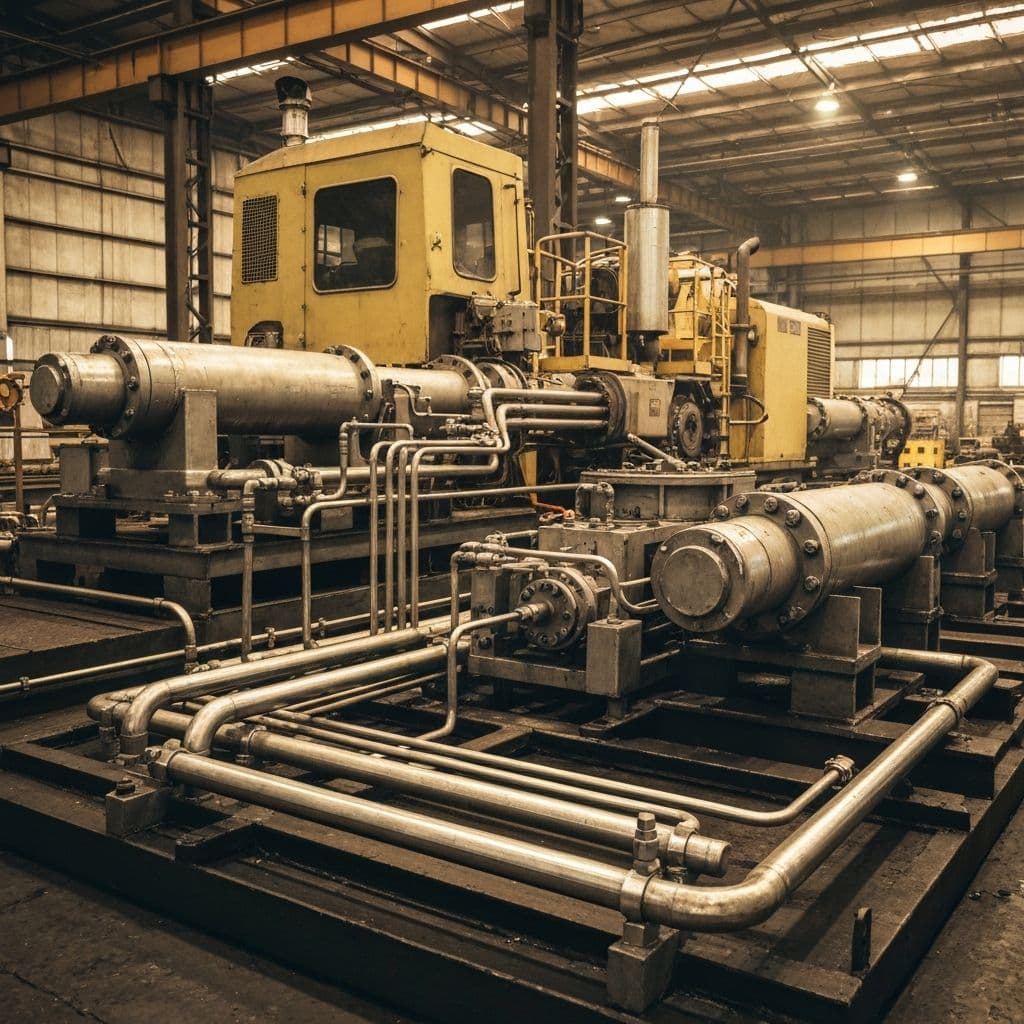
Hydraulic systems convert fluid power into mechanical force, and they are found everywhere — from construction excavators to manufacturing presses to aircraft landing gear. The hydraulic oil in these systems serves four critical functions: power transmission, lubrication, heat transfer, and contamination control.
Choosing the wrong hydraulic oil can lead to catastrophic failures. Key factors to consider include:
- Viscosity Grade: ISO VG 32, 46, and 68 are the most common. The right grade depends on operating temperature range and system design.
- Anti-Wear Properties: Zinc-based (ZnDTP) anti-wear additives are standard, but zinc-free formulations are available for environmentally sensitive applications.
- Oxidation Stability: Hydraulic oil must resist oxidation to prevent varnish and sludge formation that can clog valves and filters.
- Water Separation: Good demulsibility ensures water is quickly separated from the oil, preventing corrosion and cavitation damage.
- Filterability: The oil must pass cleanly through fine filters without additive depletion.
Our i-GlooOil hydraulic range spans ISO VG 10 through VG 100, with both zinc-based and zinc-free formulations available to meet every industrial application.